01 Search & rescue · Computer vision
SAR Vision
AI-assisted detection that helps search-and-rescue teams review drone video for people who may need help.
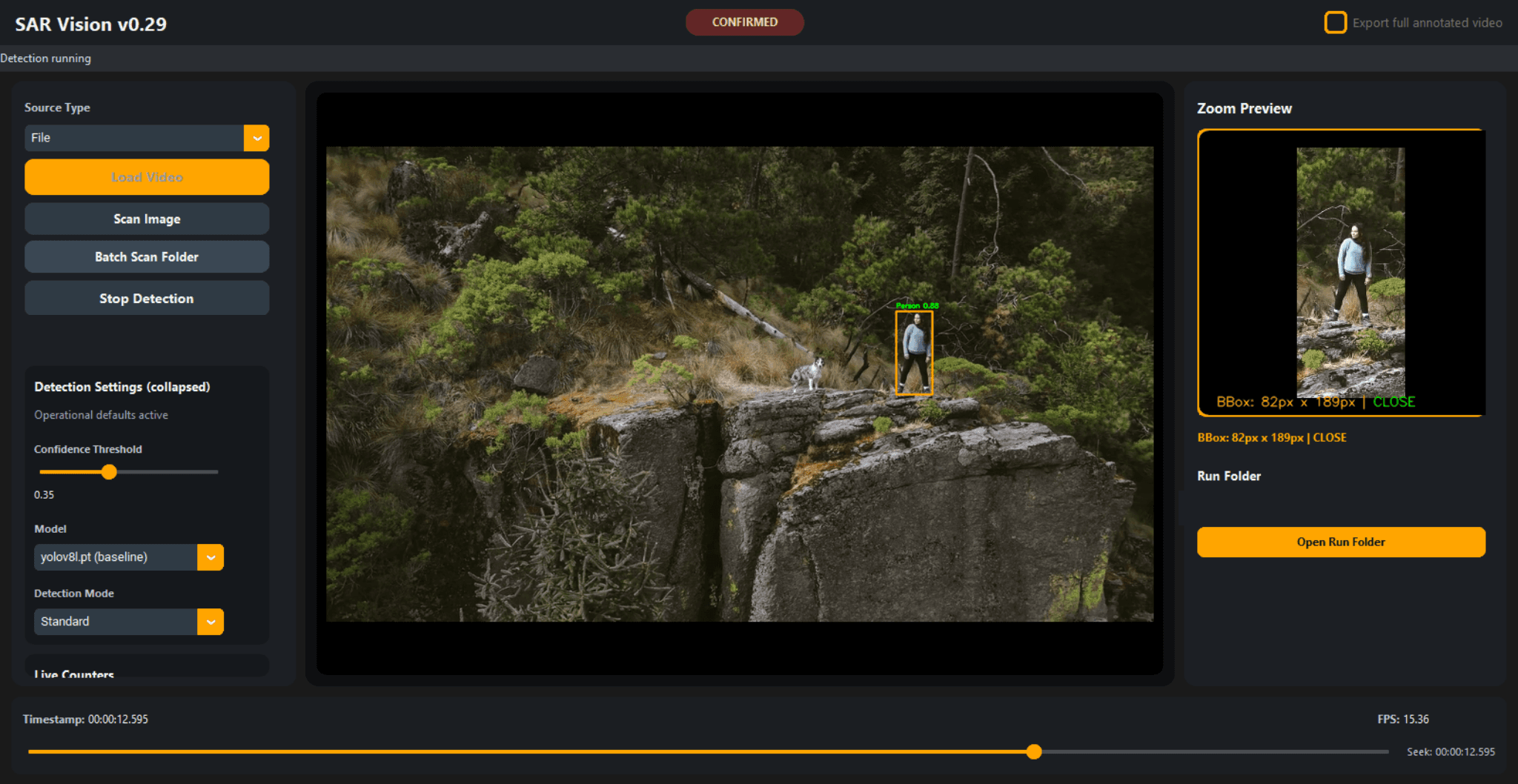
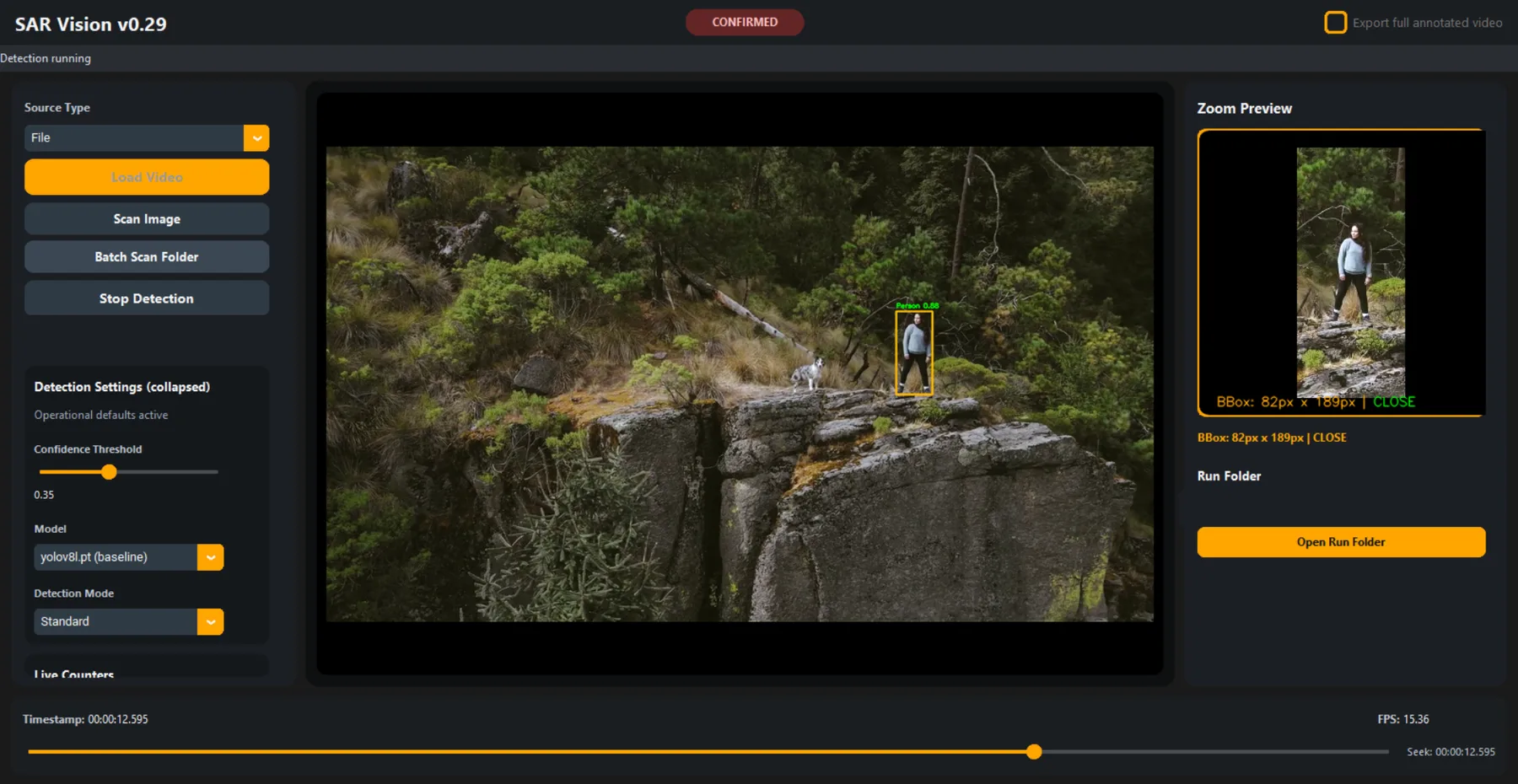
The detection interface (earlier v0.29 build) with a confirmed contact and zoom preview.
Overview
Aerial searches cover a lot of ground, and the people doing them are watching hours of video where a lost person may be only a few pixels tall. Fatigue sets in. Small details get missed.
SAR Vision is built to help with that. It runs on a field laptop, watches drone footage as it comes in, and marks anything that might be a person so the operator can take a closer look. The goal is simple: make it a little less likely that someone in the frame goes unnoticed.
General-purpose detection models are mostly trained on photos taken at ground level. From the air, people look different: foreshortened, partly hidden by trees, often lying still in clothing that blends into the terrain. SAR Vision is configured for that perspective, and for a field reality where there is often no internet connection at all.
It is a decision-support tool. The search team stays in charge of every call.
What it does today
Features
Real-time detection on drone video
Analyzes live or recorded aerial footage frame by frame and highlights possible human detections as they appear.
Works fully offline
All processing happens on the laptop. No cloud service, account or network connection is needed in the field.
Flexible video inputs
Accepts an HDMI capture feed with automatic signal recovery, an RTMP stream, or a recorded video file. Single images and whole folders can be scanned too.
Tuned to surface, not filter
Detection is configured to favor recall, so low-confidence candidates are shown for review instead of being silently discarded.
Confirmation and operator review
Time-based confirmation logic separates fleeting candidates from persistent ones, with captured thumbnails and controls for the operator to verify each contact.
Zoom preview and run records
A zoom panel shows each detection up close. Every run saves timestamped detection logs, thumbnails and an annotated video export for after-action review.
Real screenshots
Screenshots
The detection interface (earlier v0.29 build) with a confirmed contact and zoom preview. 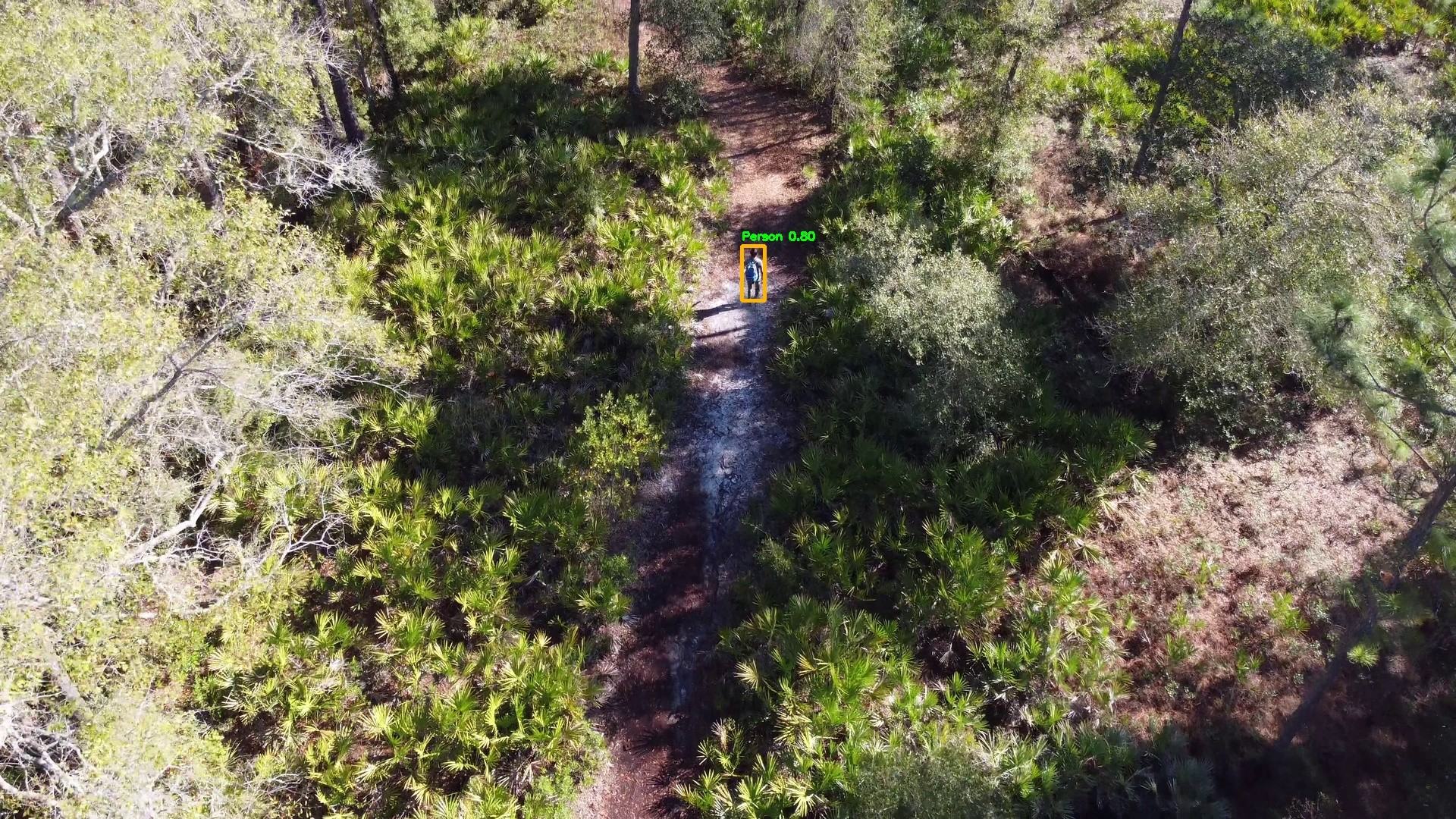
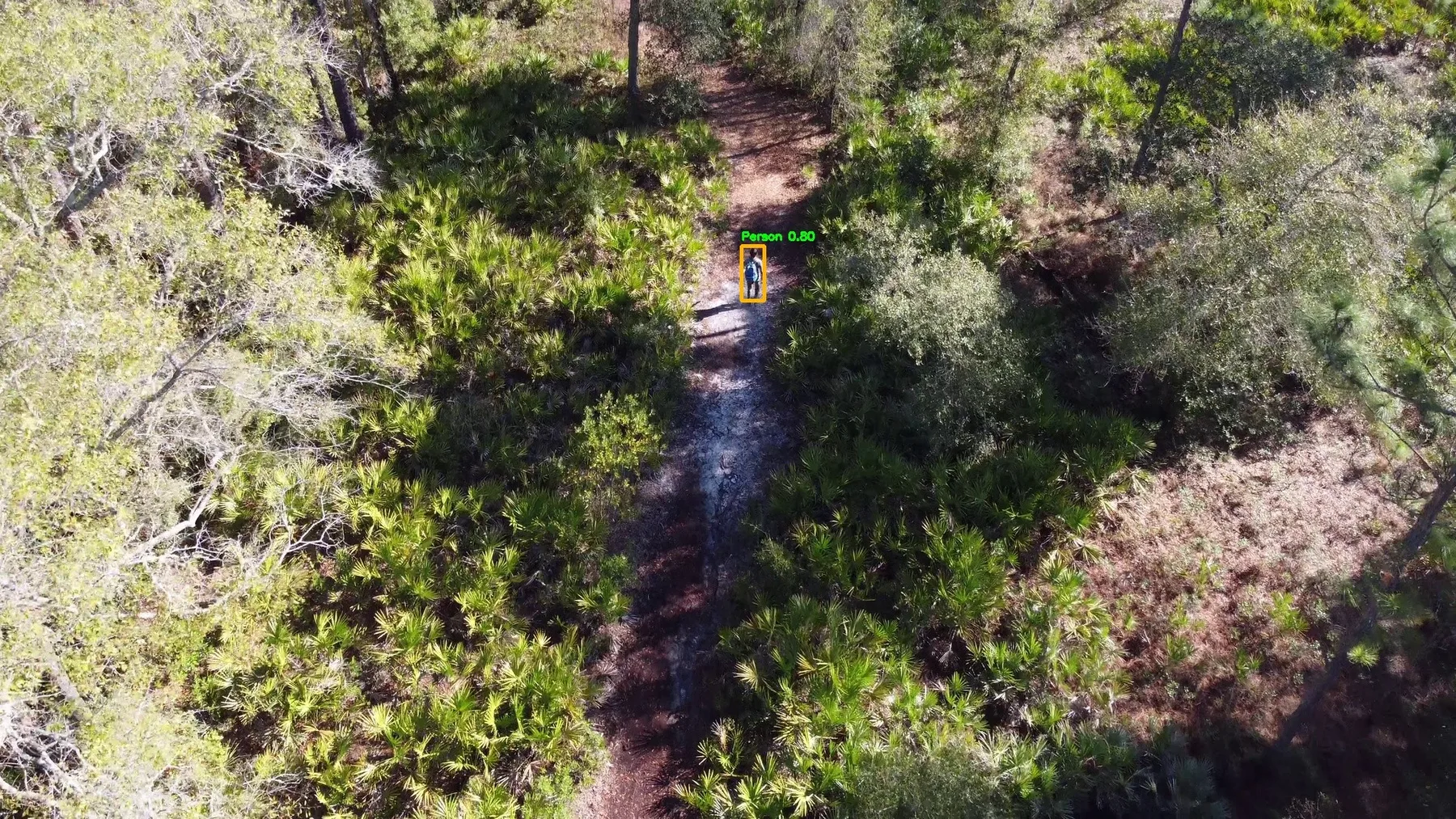
A person on a wooded trail, seen from directly overhead. 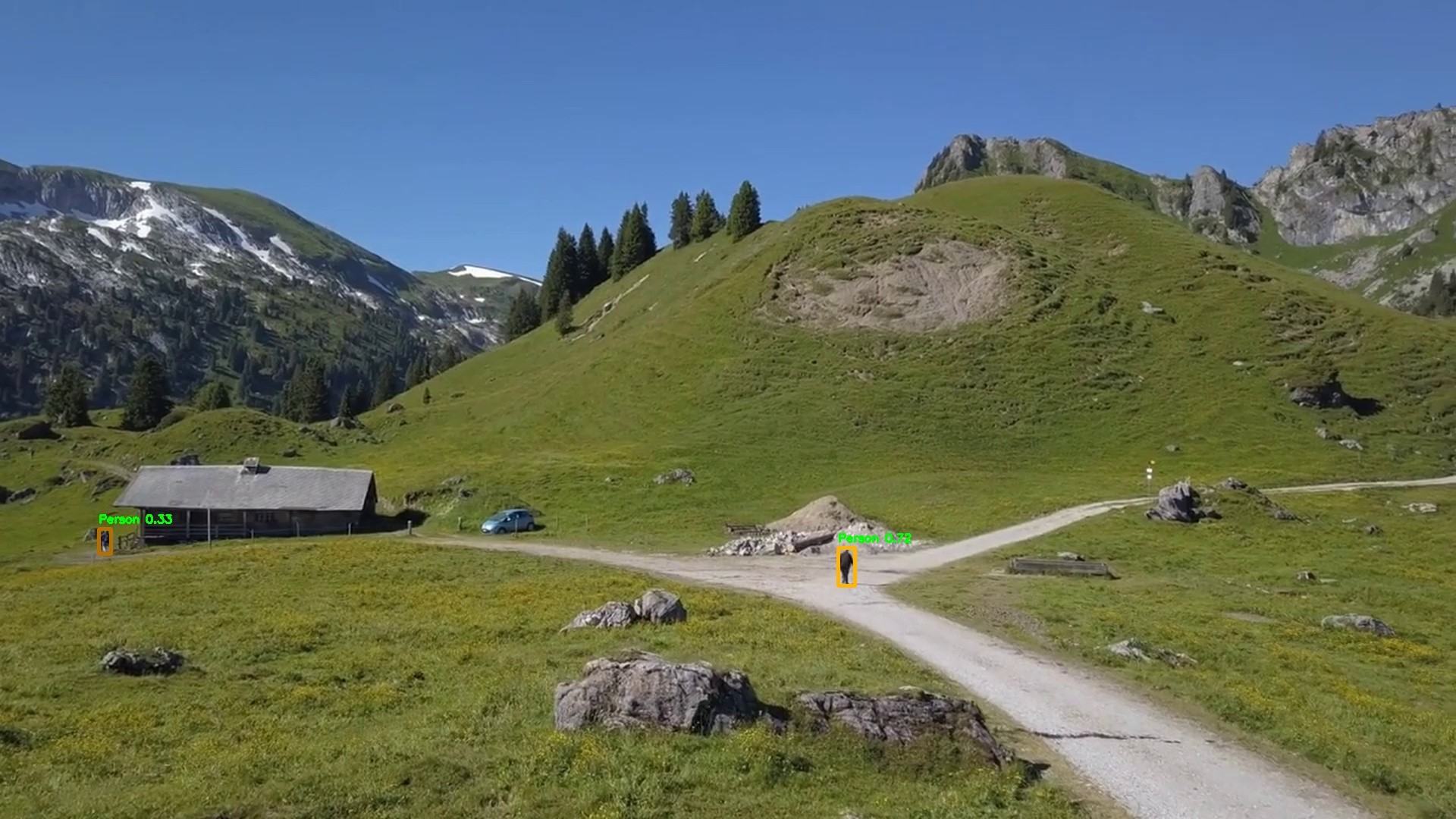
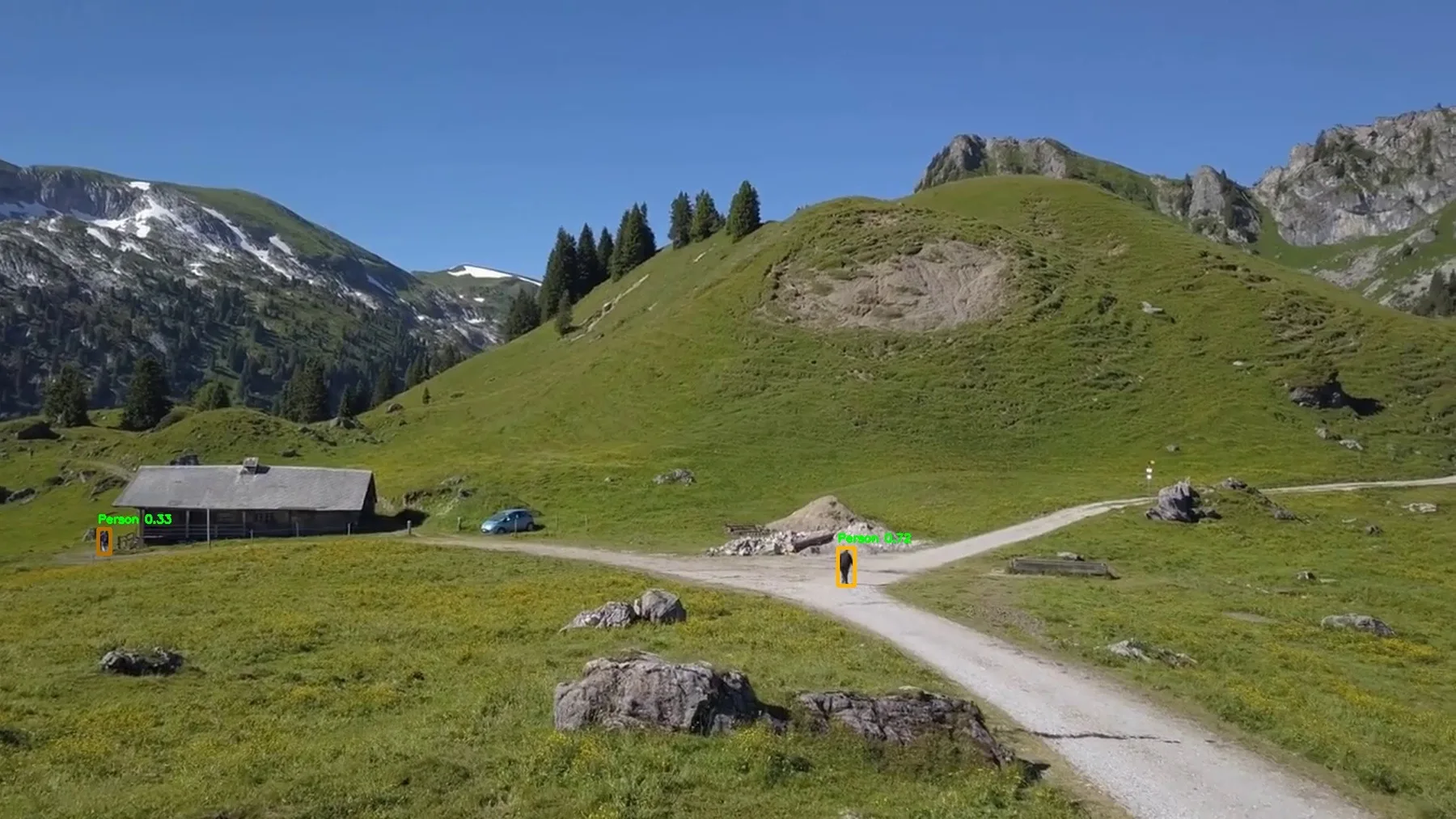
Long-range detections in open alpine terrain. 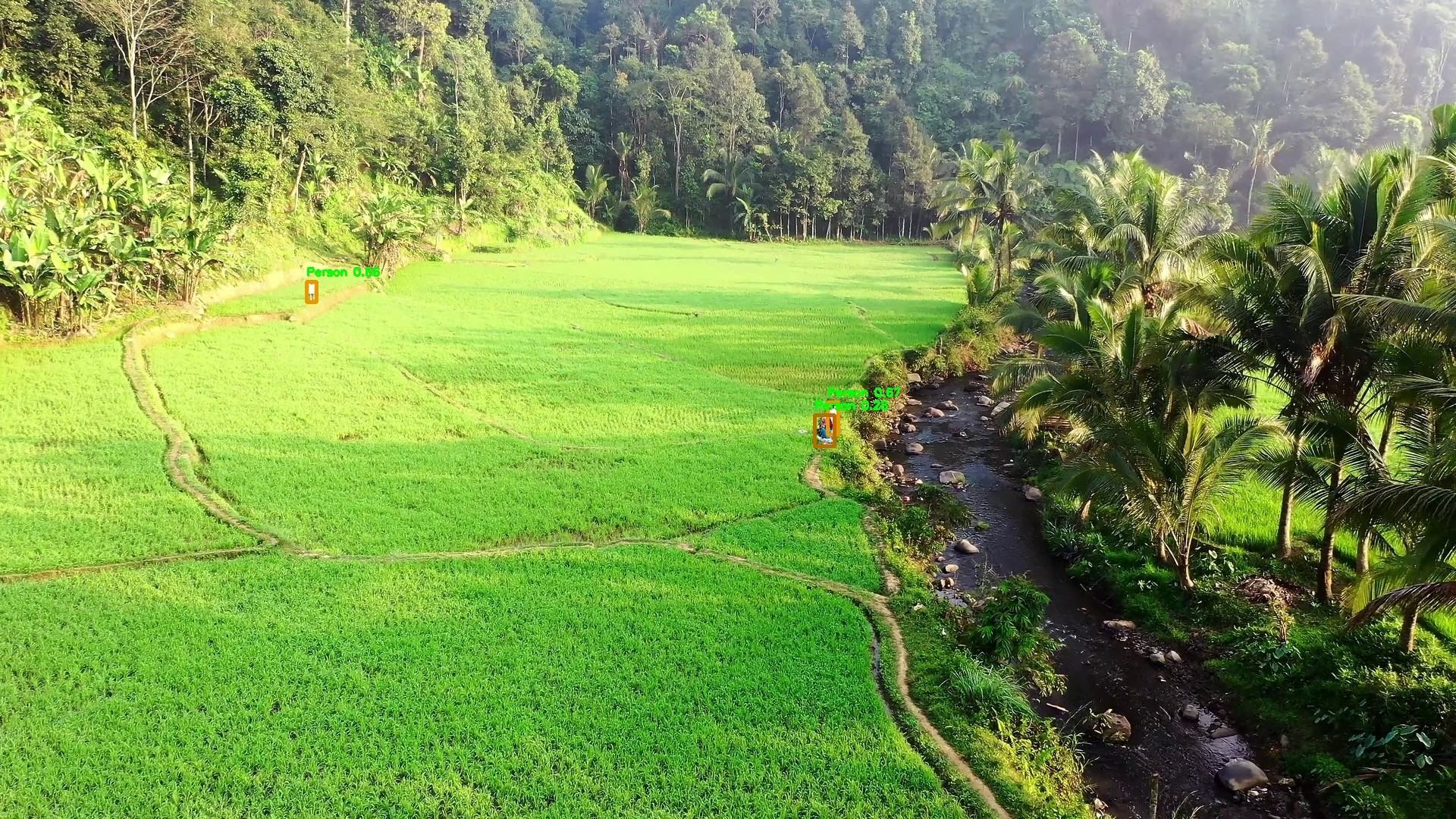
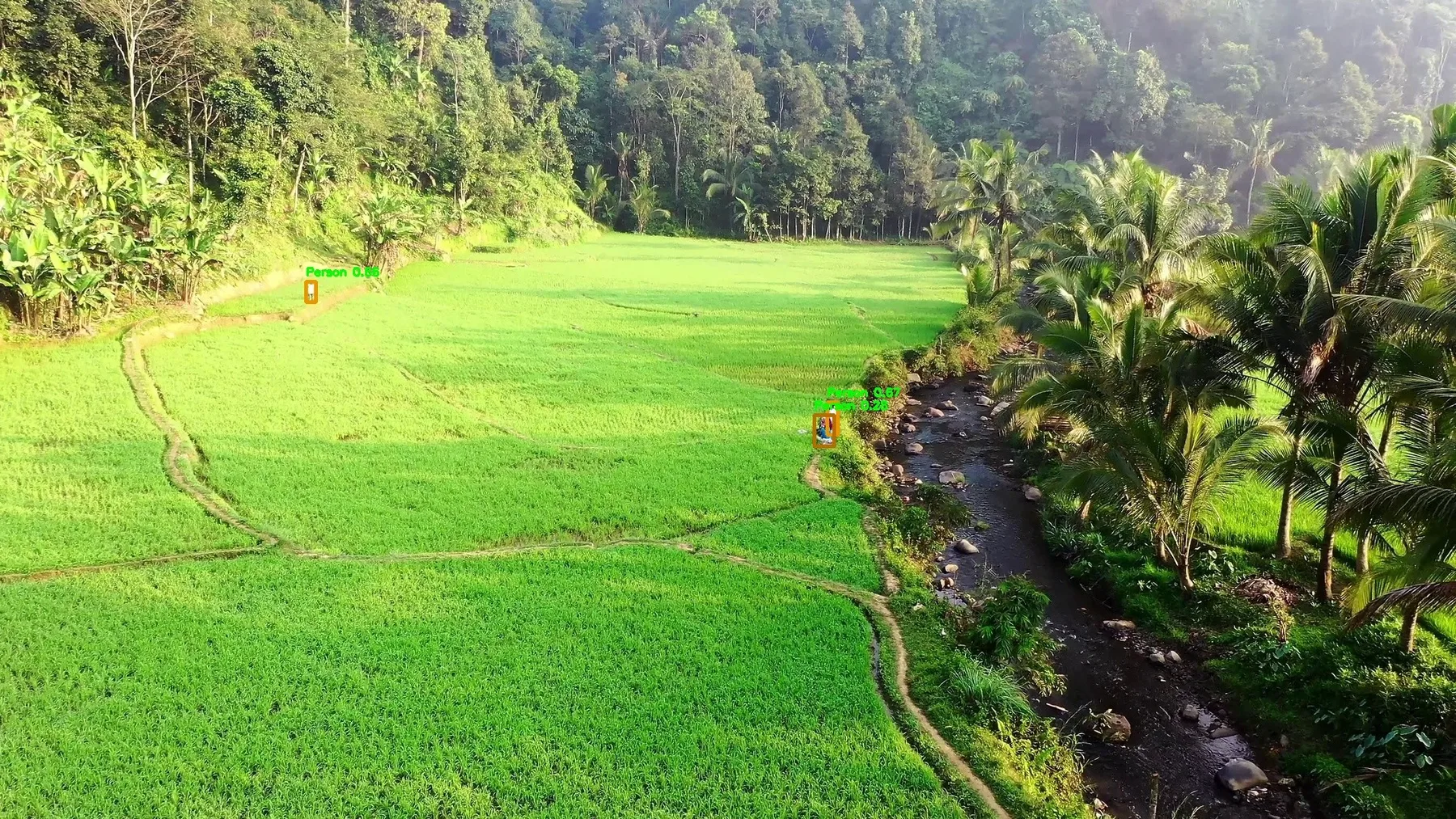
Distant figures in mixed field and stream terrain.
Development
Current status
Status: PrototypeWorking prototype under active development. The current released baseline is v0.52; field evaluation with aircraft and operators is ongoing.
Built with
- Python
- PyTorch
- Ultralytics YOLOv8
- OpenCV
Planned next
- Further field evaluation with real aircraft, hardware and operators
- Specialized aerial search-and-rescue detection models, currently opt-in and under evaluation
Good to know
- SAR Vision supports trained search personnel. It does not replace them, and every flagged contact needs human review.
- Because it is tuned to catch as much as possible, it will flag things that turn out not to be people.
- No detection system finds every person in every condition. Terrain, vegetation, altitude and lighting all affect results.
- A GPU is strongly recommended. CPU-only operation works but is much slower.